Seine River Cruise From The Eiffel Tower: Every Boarding Point Explained
Two docks sit within a ten-minute walk of the Eiffel Tower, and booking the wrong one adds a pointless detour on cruise day. Here is what actually happens at Port de la Bourdonnais and Port de Suffren, how early to show up, and when a central Pont Neuf departure fits better.
Short answer
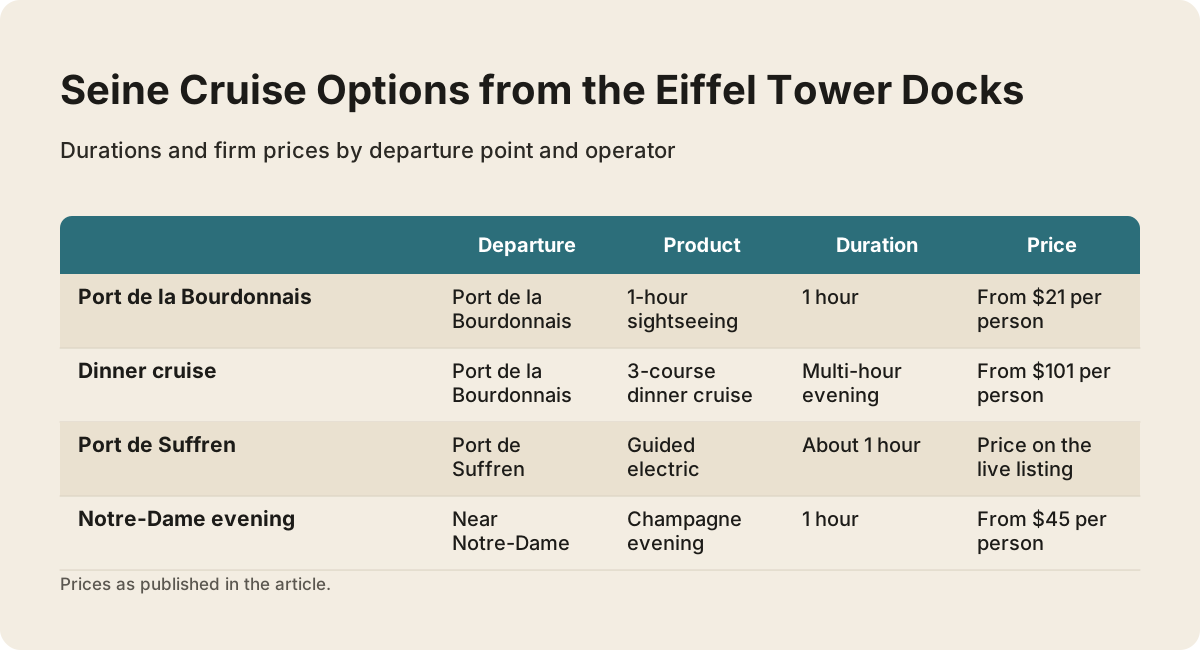
Most Eiffel Tower cruises leave from Port de la Bourdonnais (Bateaux Parisiens, from $21 per person) or Port de Suffren (Vedettes de Paris). Arrive 30 to 45 minutes early in peak season for upper-deck seats, expect a bag check, and distinguish an Eiffel Tower departure from the separate Pont Neuf evening cruise.
Where Do Seine Cruises Actually Leave From Near The Eiffel Tower?
Two nearby Eiffel Tower docks serve different operators: Port de la Bourdonnais for Bateaux Parisiens and Port de Suffren for Vedettes de Paris. Both are on the Eiffel Tower side of the river, on the left bank. Follow the operator and pontoon on your ticket; the tickets are not interchangeable.
The distinction matters more than most first-time visitors expect. A traveler staying near the Trocadéro assumes their ticket is "at the Eiffel Tower" and walks to the first pontoon they see, only to find it belongs to a different operator with a separate manifest. Every operator scans tickets against its own boarding list, so a Bateaux Parisiens e-ticket will not get you onto a Vedettes de Paris boat, and vice versa, even though both boats pass the same monuments an hour apart.
Several Seine products depart elsewhere: Batobus uses the Eiffel Tower as one of nine stops, while the Pont Neuf evening cruise boards on Île de la Cité. Check the meeting point and return pier on the exact listing; a view of the tower does not establish an Eiffel Tower departure.
The good news is that both Eiffel Tower docks are genuinely easy to reach. Port de la Bourdonnais sits about a five-minute walk from the Bir-Hakeim and Trocadéro stations, and Port de Suffren is similar, which makes this corner of Paris the most cruise-accessible embarkation zone on the river. Our overview of how long Seine cruises take and what route they follow covers what happens after you board.
Port De La Bourdonnais Vs Port De Suffren: Which Dock Is Yours?
Port de la Bourdonnais, on the left bank beside the tower, is the Bateaux Parisiens dock: this is where the 1-hour Seine cruise departing from the Eiffel Tower boards, alongside the operator's 3-course dinner cruise, and it is the single most-booked sightseeing product in the Paris cruise set at 4.4/5 with close to 90,000 reviews. Port de Suffren, on the left bank a few hundred meters south, is the Vedettes de Paris base, home to the only fully electric and live-guided sightseeing cruise in the set, with 1,937 reviews and the current price on the live listing.
The two docks offer genuinely different experiences despite the shared skyline. Bateaux Parisiens runs large modern boats with a top deck plus indoor seating and audio commentary in up to 14 languages through an app, and its round trip from $21 per person passes Notre-Dame, the Louvre and the Musée d'Orsay. Vedettes de Paris runs smaller boats, part of a fleet converting to electric power, with a live guide in English or French plus an audio app in additional languages, and the electric propulsion on its converted boats makes for a noticeably quieter deck, a point recent traveler comparisons on Paris forums keep raising when they recommend the operator. If your comparison is really between the two biggest classic operators, the shorter Bateaux Parisiens vs Mouches verdict answers that question directly.
Choosing between them usually comes down to two practical questions. First, where are you coming from: both docks are on the left bank near the tower, so follow your operator’s exact meeting pin rather than choosing by river bank. Second, do you want live commentary or an app: the Bateaux Parisiens product is audio-app based on most sailings, while the Vedettes de Paris guided cruise puts a real guide on the microphone, which many families and first-time visitors prefer.
The Vedettes de Paris cruise offers an optional aperitif or snack upgrade. Compare your selected option and party total with the Bateaux Parisiens sightseeing ticket; neither price should be treated as a fixed quote from an older article.
| Departure point | Operator | Featured product | Duration | Firm price | Notes |
|---|---|---|---|---|---|
| Port de la Bourdonnais (left bank, foot of tower) | Bateaux Parisiens | 1-hour sightseeing cruise | 1 hour | From $21 per person | 4.4/5, close to 90,000 reviews; audio app up to 14 languages |
| Port de la Bourdonnais | Bateaux Parisiens | Gourmet dinner cruise | 2.5 hours sailing; allow 195 minutes including check-in | Check chosen service | Three or four courses depending on service |
| Port de Suffren (left bank) | Vedettes de Paris | Guided electric cruise with optional aperitif or snack | About 1 hour | Price on the live listing | 1,937 reviews; live guide, 100% electric boat |
| Pont Neuf, Square du Vert-Galant | France Tourisme / Vedettes du Pont Neuf | Sunset and evening cruise | 1 hour plus early arrival | Check selected date | Drink and background music; round trip |
How Early Should You Arrive At The Eiffel Tower Docks?
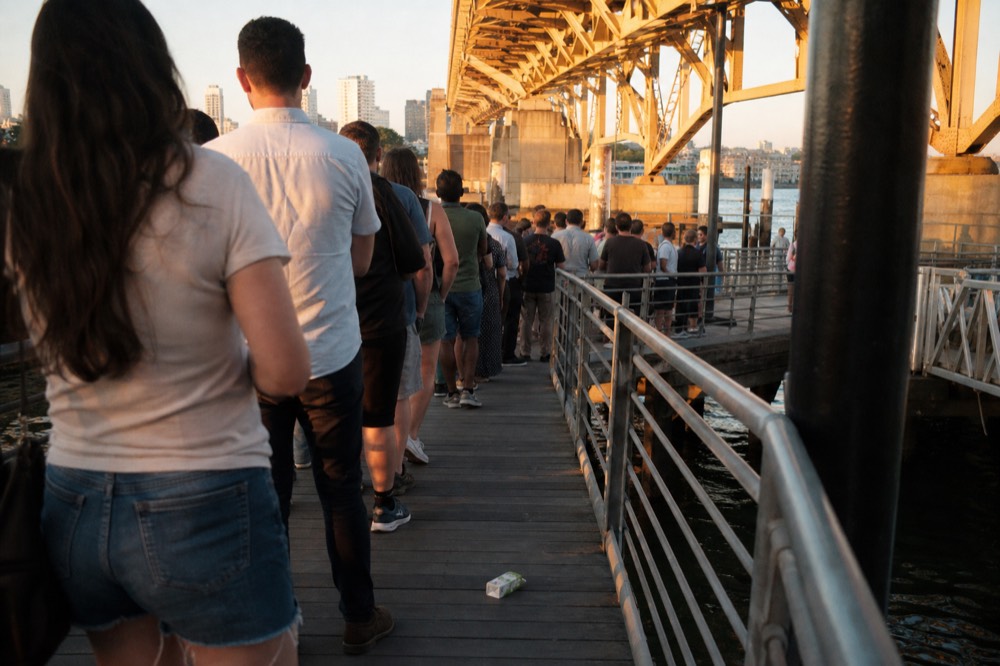
Arrive 30 to 45 minutes before your sailing in peak season if you want an upper-deck railing seat, and at least 15 to 30 minutes early at any time of year, because both Eiffel Tower docks run security bag checks on entry and the queues form before boarding opens; travelers with pre-purchased tickets have still reported waits of 15 to 60 minutes at peak sailings in 2025 and 2026. Those numbers come from recent traveler reports, and they match what the operators themselves advise: online tickets skip the ticket office, not the security line.
The upper deck is the scarce commodity here. Every sightseeing boat on this stretch of the river fills its open deck first, and once the railing spots go, late arrivals are seated inside behind glass, which on a clear evening is the difference between a postcard view and a reflection problem. Reports from the 2025 and 2026 seasons consistently recommend the 30 to 45 minute early arrival specifically for evening sailings, when demand is heaviest and the Eiffel Tower sparkle pulls the biggest crowds onto the water.
Morning sailings are the relaxed option. First departures around 10 a.m. see fewer passengers, calmer light for photography and shorter lines at the bag check, which is why our guide to the best time for a Seine river cruise leans toward the first slots for anyone who prioritizes deck space over illuminated monuments. If you cannot do morning, the trade is straightforward: evening gives you the sparkle and the lit bridges, morning gives you room to move.
A transit note worth flagging for autumn visits: engineering works on Metro Line 6 may close Bir-Hakeim station, the closest stop to the Bourdonnais dock, on select Sundays between September and November 2026. Check the transit authority's service alerts for your travel date, and if the station is shut, walk from Trocadéro across Pont d'Iéna or allow extra time, since the detour adds roughly fifteen minutes.
| Sailing type | Recommended arrival | Why |
|---|---|---|
| First morning departure (around 10 a.m.) | 15-20 minutes | Lightest crowds of the day, short bag-check line |
| Midday, off-season | 15-30 minutes | Moderate demand, boats rarely full |
| Sunset and evening, any season | 30-45 minutes | Upper deck fills first; sparkle sailings are the busiest |
| Peak summer weekends | 45 minutes | Dated 2025-2026 reports show 15-60 minute waits even with tickets |
| Dinner cruise boarding | Per listing instructions | Seated products board by manifest; follow the operator's stated window |
What About Seine Cruises From Notre-Dame?
For a central Paris alternative, the verified sunset and evening cruise departs from Square du Vert-Galant at Pont Neuf, not the Notre-Dame quay. It lasts an hour and includes a glass of wine, Champagne or a soft drink with background music. Check the named departure point rather than assuming a cruise passing Notre-Dame boards there.
A central-island departure may fit a day around Île de la Cité better than crossing Paris to the Eiffel Tower. The Pont Neuf cruise is a round trip and returns to its departure point; seeing the tower along the route does not mean the trip finishes at the tower. Our evening Champagne cruise guide discusses the difference between departure points and the views along the way.
Use the dated departures for the product you select. A seasonal schedule attached to one operator cannot be transferred to a different evening cruise, and sunset times change through the year. Plan onward travel from the actual return pier.
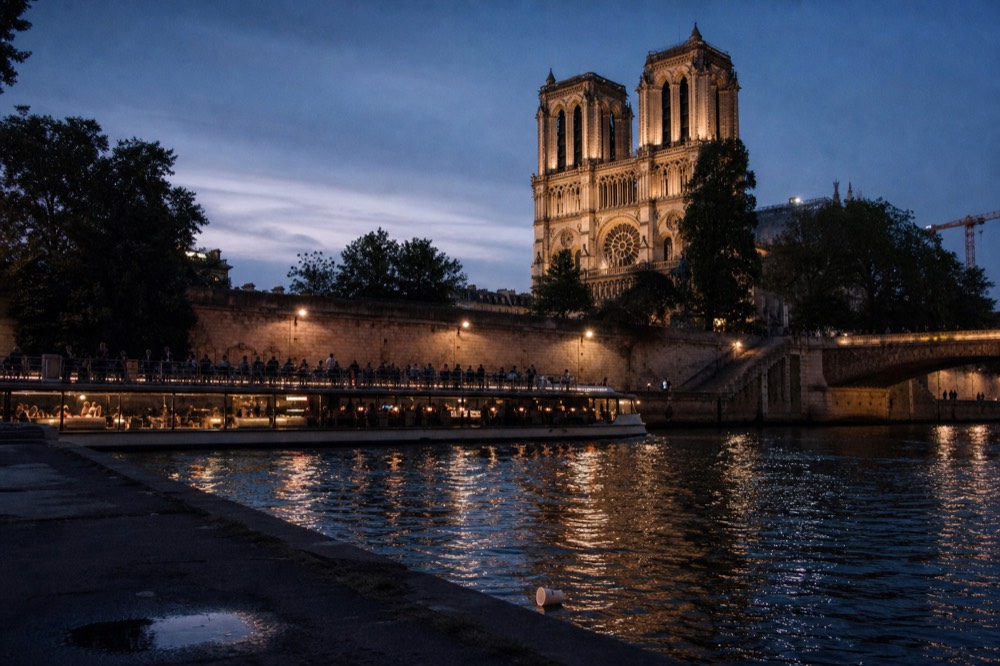
One logistics note for the cathedral side: the surrounding quays and parvis remain in redevelopment, with archaeological work from around August 2026 into 2027, though no cruise dock shutdowns have been reported from the works. The boarding area near Quai de Montebello has stayed open through the works, but allow a few extra minutes to navigate any fenced sections on foot.
Bag Checks, Security And Boarding Practicalities
Expect an airport-style bag check at both Eiffel Tower docks before you reach the pontoon: security staff screen bags on entry at Port de la Bourdonnais, digital tickets are scanned at the boarding gate, and large luggage is not permitted, so travel light and keep your e-ticket on your phone with the screen brightness up. The checks are quick and routine, but they are the main reason the 15-minute-early traveler becomes the person watching the boat pull away.
A few practical habits make the whole boarding sequence painless. Screenshot or download your ticket before you leave your hotel, since mobile signal at the dock can be patchy with a thousand people around. Keep bags small; daypacks pass easily, roller cases do not. If you are sailing in a group, agree a meeting point on the quay in advance, because the boarding zones at Bourdonnais are split into numbered pontoons and groups get separated in the shuffle toward the front of the line.
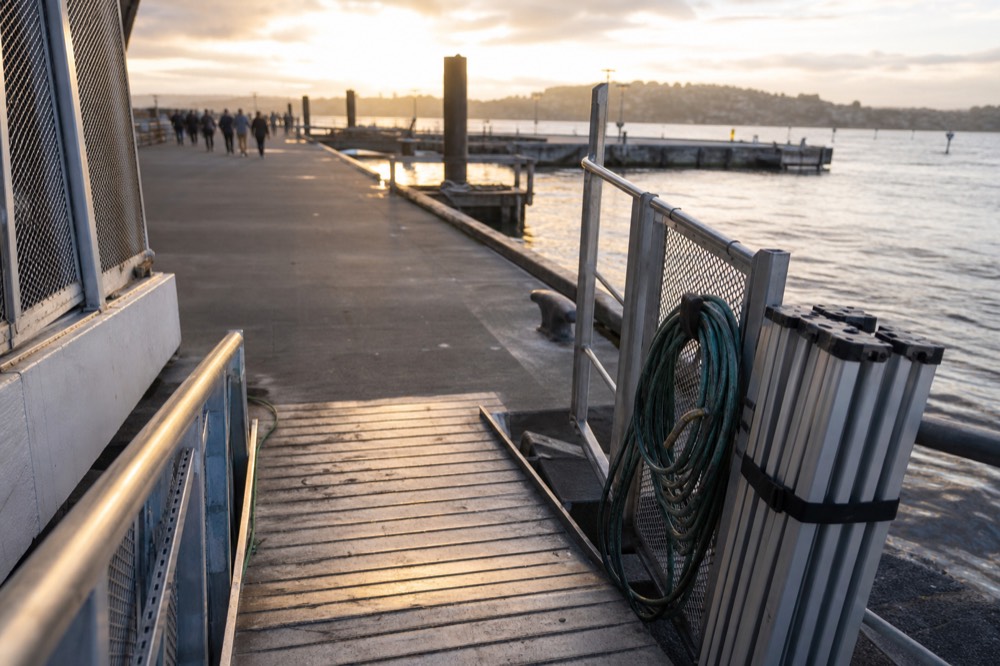
Weather preparation belongs at the boarding stage too. The upper deck is open to the sky, and evening sailings get cool on the water even in summer; a layer you can tie around your waist is the standard local move. In rain, the indoor saloons on both operators' boats are heated, so a wet forecast is a reason to arrive earlier for a window seat, not a reason to skip the cruise. Our piece on choosing between a day or night Seine cruise goes deeper on the light-and-weather trade-offs.
For families, one more boarding detail: strollers generally need to be folded on the shuttle-style boats, and the sightseeing boats have step-free ramp access at the main docks, with Bateaux Parisiens generally described as the most fully wheelchair-accessible option, ramp access with no steps and dedicated wheelchair spaces near the panoramic windows. Accessible boarding is limited to specific piers, so contact the operator ahead of your sailing to confirm current arrangements rather than assuming every departure works the same way. For the complete picture, our full guide to cruises for families covers menus, durations and stroller access across every operator.
Which Departure Point Fits Your Itinerary?
Choose Port de la Bourdonnais for the Bateaux Parisiens audio-guided sightseeing loop, or Port de Suffren for Vedettes de Paris’s live-guided hour. For a central-island evening, compare the Pont Neuf departure instead. All are round-trip choices, so match the return pier to the rest of your day.
The sightseeing cruises from the tower return to the tower; the Pont Neuf evening cruise returns to Pont Neuf. Pairing the actual return point with dinner or the journey back to your hotel removes unnecessary travel at the end of the outing.
The electric cruise deserves a special mention for a specific traveler type: anyone who has already done a big-boat sightseeing loop in a past visit. The live guide, the silent propulsion and the aperitif option make it feel like a different product rather than a repeat, and its departure point at Port de Suffren keeps it within the same Eiffel Tower orbit. The rating sits around 4.0 across sources that disagreed slightly, so check the live listing for the current figure rather than a rounded number quoted secondhand.
| If your day looks like this | Best departure | Why |
|---|---|---|
| Tower visit in the morning, cruise after | Port de la Bourdonnais | Zero transit; board minutes after descending |
| Staying in the 7th or 15th arrondissements | Port de Suffren | Shortest walk, quieter boat, live guide |
| Based near Île de la Cité, evening free | Pont Neuf | Round-trip evening cruise with a drink; check your date |
| Photography-focused visit | Port de la Bourdonnais, first morning sailing | Calm light, empty railing, short lines |
| Repeat visitor who has done the classic loop | Port de Suffren | Electric boat, live commentary, aperitif upgrade |
Weather And Water Levels: Can A Seine Cruise Be Cancelled?
Yes, though full cancellations are rare: the City of Paris states navigation on the Seine halts outright only when the river reaches 4.30 metres on the Austerlitz gauge, and below that threshold operators typically adapt instead of cancelling, closing upper decks, shortening routes or switching to smaller boats, as named operators did during the October 2024 high-water event. In early September 2026 the gauge sat around 0.95 metres, comfortably in the normal range.
The mechanism is worth understanding because it explains the pattern of disruption travelers occasionally report. As levels rise, the waterway authority's rules, updated in a revised navigation regulation effective 14 October 2025, impose size limits that scale with the gauge, and passenger boats need a minimum 0.50 m clearance between their highest point and the underside of each bridge. A boat that normally squeezes under Pont Neuf with room to spare may lose its upper deck privileges or turn back early at the Passerelle des Arts, which is exactly what operators described doing on the record during the 2024 floods.
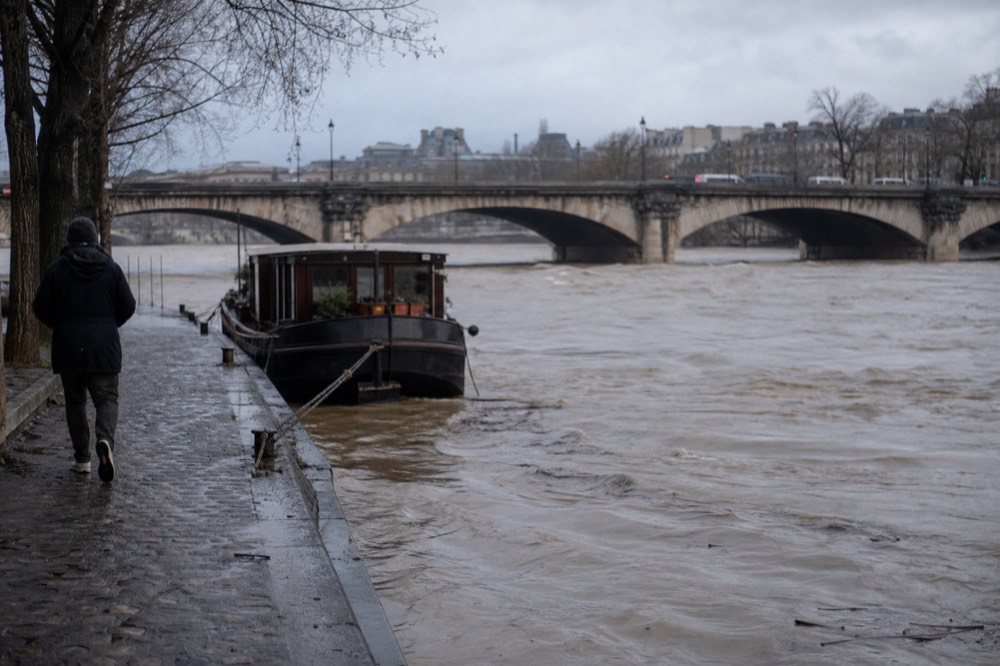
For a visitor, the practical takeaway is reassurance rather than alarm. No flood-driven passenger-cruise suspensions were recorded in 2025 or 2026 beyond the documented 2024 events, and the river's level is publicly tracked in real time at Vigicrues, the official flood-monitoring service the operators themselves watch hour by hour. The city's own flood-stage thresholds are published at paris.fr. If a storm is forecast for your date, a quick glance at the gauge tells you whether anything is likely to change.
What Will You Actually See From The Eiffel Tower Docks?
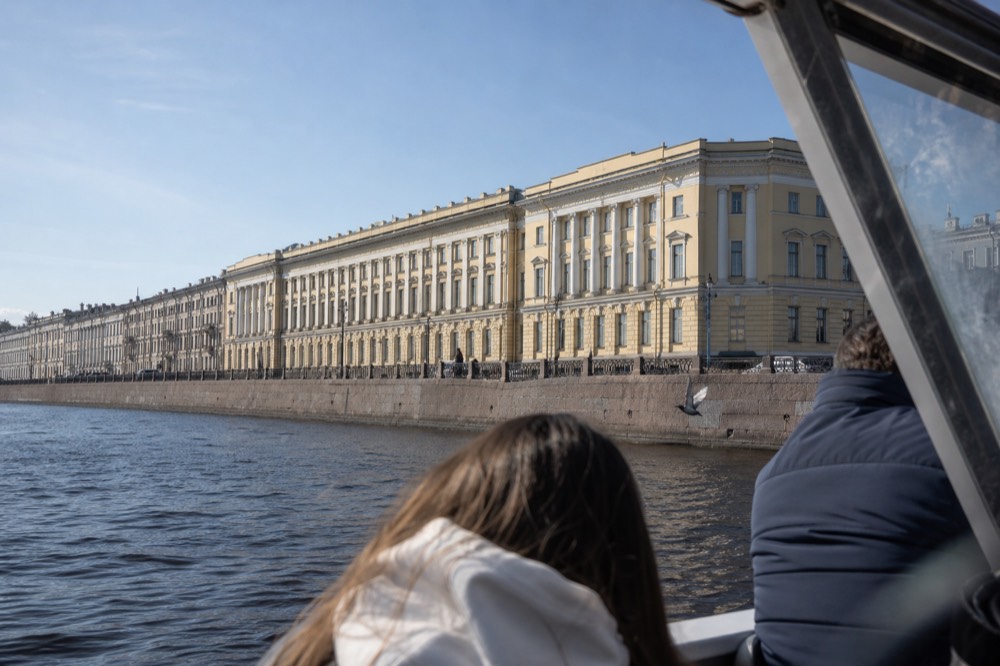
From the water, the standard loop from either Eiffel Tower dock passes the Trocadéro, the Grand Palais and Pont Alexandre III, the Musée d'Orsay, the Louvre and its riverside quays, Île de la Cité with Notre-Dame, and the Hôtel de Ville, before turning back toward the tower, with the whole circuit covered in about an hour on the sightseeing products and longer on the dinner sailings. The direction of travel simply reverses the order depending on your departure point.
The monuments arrive at a walking-pace rhythm that surprises first-timers. The Seine through central Paris is slow and narrow enough that every bridge feels like a doorway: you duck under one and a new facade opens up. The audio commentary on the big boats is timed to these arrivals, which is why even skeptics of recorded guides tend to keep their headphones in. On the electric cruise, the live guide does the same work in person, and the silence between landmarks is part of the appeal.
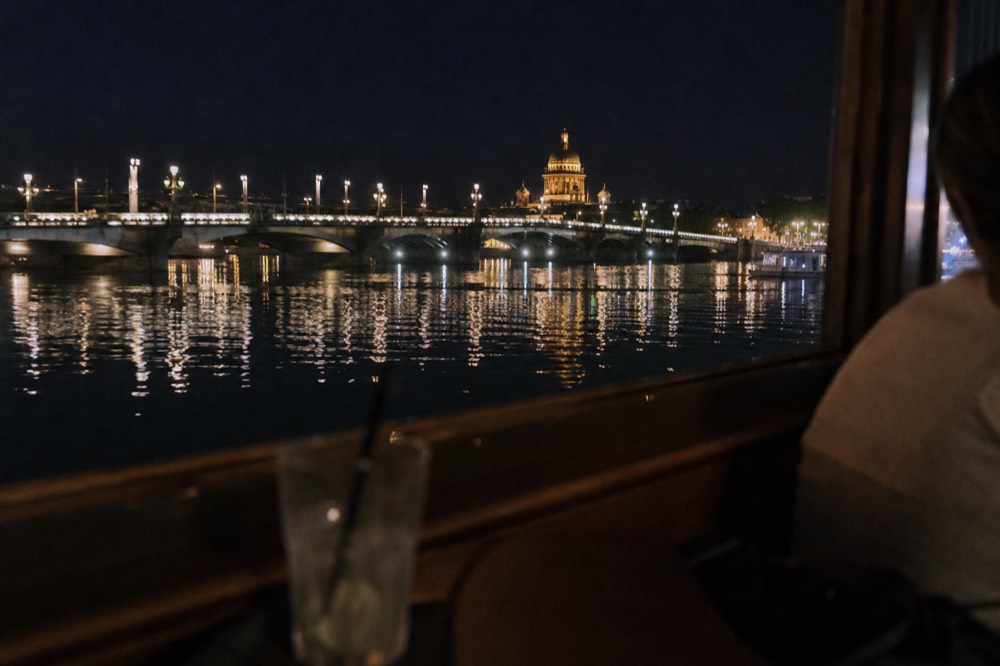
Evening changes the inventory. The tower's sparkle runs for five minutes at the start of every full hour after dusk until midnight, or 1 a.m. in summer, and the typical dinner and evening departure slots, roughly 6:15 p.m., 8:15 to 8:30 p.m. and 9:15 p.m., are timed so later sailings usually catch it from the water. If the sparkle is the reason you are booking, pick a sailing that will still be on the river at the top of an hour after dark, and check sunset time for your date rather than assuming a fixed schedule.
How To Book Without Overpaying Or Getting Stranded
Book sightseeing cruises online for the skip-the-line convenience but expect same-day availability in most seasons, book dinner cruises well ahead, since listing data shows they are reserved roughly 45 to 47 days in advance on average, and buy only from the operator's live listing or a reputable reseller, because 2025 and 2026 traveler reports document third-party markup and non-honored tickets on bundled Eiffel Tower products. The Paris Museum Pass does not include any Seine cruise, so treat cruise tickets as a separate purchase.
The advance-booking gap between product types is the single most useful planning fact in the pricing research. A one-hour sightseeing cruise is a walk-up product in all but the busiest weeks; a dinner cruise is a reservation, closer to a restaurant than a ride. The flagship Bateaux Mouches dinner cruise in particular is a known sell-out risk in peak season, and the same pressure applies to popular Eiffel Tower dinner departures in July and August.
A note on seat upgrades: one October 2025 review documented a premium seat purchase that failed to deliver the promised view because of an obstructed window, a reminder that "guaranteed view" language deserves scrutiny. If a view matters, the upper deck of a standard ticket, claimed by arriving early, is a more reliable bet than an indoor premium seat. For the full price landscape across operators, see our Seine river cruise prices guide, and for whether the experience justifies the ticket at all, our honest assessment of whether a Seine cruise is worth it pulls no punches.
This site, Cruise in Seine River, exists precisely because the difference between a great cruise day and a frustrating one is usually logistics rather than luck: the right dock, the right arrival buffer and the right product for your dates.
The Bateaux Parisiens one-hour loop and Vedettes de Paris guided hour both depart near the tower, but offer different commentary. Choose the format first, then confirm the operator’s meeting point and dated ticket total.
The questions below cover the boarding details travelers ask about most: which dock serves which operator, how early to arrive, whether the Notre-Dame departure is an option, and what happens when the weather turns. Each answer sticks to the verified figures in this guide, with the September 2026 checked tag on every price and rating so you can see at a glance which numbers are current and which belong on the live listing instead.
Common Questions About Seine Cruises From The Eiffel Tower
Where does the Seine cruise leave from at the Eiffel Tower?
Two docks: Port de la Bourdonnais on the left bank beside the tower, used by Bateaux Parisiens for its 1-hour sightseeing cruise (from $21 per person) and dinner cruises, and Port de Suffren on the left bank, used by Vedettes de Paris for its electric guided cruise. Check your ticket for the named dock before you walk to the river.
How early should I arrive for a Seine cruise at the Eiffel Tower?
Plan on 30 to 45 minutes early in peak season if you want an upper-deck seat, and 15 to 30 minutes at quieter times. Both docks run bag checks before boarding, and 2025 and 2026 traveler reports describe waits of 15 to 60 minutes even with pre-purchased tickets at busy sailings.
Can I board a Seine cruise from Notre-Dame instead?
Do not assume a Notre-Dame view means a Notre-Dame departure. The verified central-island alternative here boards at Pont Neuf, Square du Vert-Galant, for a one-hour evening cruise and returns there.
Is there a bag check at the Eiffel Tower cruise docks?
Yes. Security staff screen bags on entry at Port de la Bourdonnais and Port de Suffren, digital tickets are scanned at the boarding gate, and large luggage is not permitted. A small daypack passes quickly; a roller case will not.
Can weather or water levels cancel a Seine cruise?
Full cancellations are rare. Navigation halts outright only when the Seine reaches 4.30 metres at the Austerlitz gauge; below that, operators typically shorten routes or close upper decks rather than cancel. Levels sat around 0.95 metres in early September 2026, in the normal range, with no flood-driven suspensions recorded in 2025 or 2026.
Which Eiffel Tower cruise is best for a first visit?
The Bateaux Parisiens 1-hour cruise is the default pick: year-round departures, from $21 per person, 4.4/5 with close to 90,000 reviews, and audio commentary in up to 14 languages. Repeat visitors often prefer the Vedettes de Paris electric cruise for its live guide and quieter boat.
Your Next Step On The Seine
Seine River Guided Cruise by Vedettes de Paris
Have your Eiffel Tower visit planned? Check the live-guided cruise for your date and allow its early-arrival time before setting your walk to the pier.
one-hour electric sightseeing cruise with live English/French guide from Eiffel Tower. Champagne/snack upgrades optional. 60 minutes cruising; arrive 20 minutes early. Allow 80 minutes including boarding. Travel to the pier is extra.
Adjust Your Choice And Compare Costs
Start with this general recommendation, or choose what matters to you. Durations are listed with each option. Allow additional time to reach the meeting point and check in.
- Seine River Guided Cruise by Vedettes de Paris
- one-hour electric sightseeing cruise with live English/French guide from Eiffel Tower. Champagne/snack upgrades optional. 60 minutes cruising; arrive 20 minutes early.
- Paris: 1-Hour Seine Cruise departing from the Eiffel Tower
- Port de la Bourdonnais, pontoon 3, Bateaux Parisiens logo, Eiffel Tower. One-hour round-trip sightseeing cruise; Multilingual audio / smartphone commentary. Wheelchair accessible; Under-4s free; No oversized luggage or large bags; Assistance dogs allowed; other pets prohibited.
- Bateaux Parisiens Seine River Gourmet Dinner & Sightseeing Cruise
- Bateaux Parisiens dinner from the Eiffel Tower: 2.5-hour sailing, with check-in from 7:45pm for 8:30pm departure. Three or four courses by service, private table, live singer and included drinks by package. Window seating requires the corresponding service. Smart casual; no sports shoes or shorts. No hotel pickup.
- Paris Seine River Sunset & Evening Champagne Cruises
- one-hour Pont Neuf evening/sunset cruise with one glass of wine, Champagne or soft drink and background music. 60 minutes; arrive 15 minutes early.
Choose a date to see published departures. Seats and final prices are confirmed on Viator.
No listed experience fits those choices. Adjust the experience or time, or reset to the general recommendation.