Best Time For A Seine River Cruise: Day, Sunset Or Night
The Seine runs through Paris at every hour, but the river you get at 10am and the river you get at 9pm are two different experiences. Here is how to pick your departure, with the real sparkle schedule, the real evening slot times and the crowd patterns behind them.
Short answer
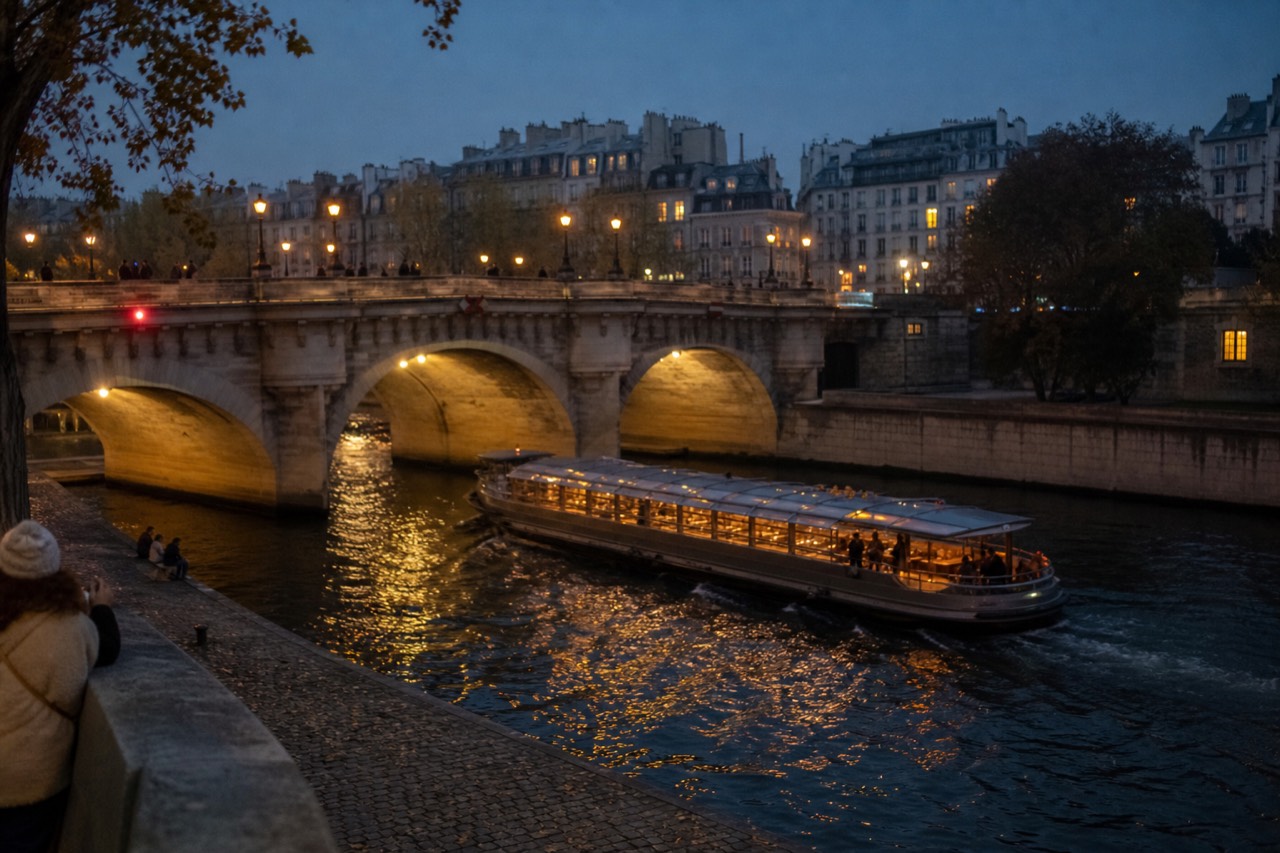
The best time for a Seine cruise is sunset or early evening, when monuments light up and the Eiffel Tower sparkles for 5 minutes at the start of every full hour after dusk. Morning sailings from around 10am are the calmest and best for photos in natural light. Evening champagne cruises run from about $38 to $45 per person.
The single most common mistake people make with a Seine cruise is treating it as one product. It is really three: a daytime loop past buildings, a golden-hour drift, and a night ride through a city of lit bridges. The boats are similar, the route is broadly the same stretch of river, yet the crowd, the light and the mood change completely between the first departure of the morning and the last sailing after dark.
This guide breaks the day into those blocks and tells you which of our featured cruises runs in each one, what the real departure-time pattern looks like, and why the Eiffel Tower's sparkle schedule has quietly become the most important clock in Paris evening planning. For the full landscape of operators and products, Cruise in Seine River maintains a complete roster across sightseeing, dinner and evening categories. And if the river's name itself trips you up before you even book, the correct way to pronounce Seine takes about three seconds to learn.
What Time Of Day Is Best For A Seine Cruise?
The best time of day for a Seine cruise depends on what you want: morning, from around 10am, brings the calmest decks and cleanest light; sunset delivers the strongest photos; and the hour after dusk treats you to illuminated monuments plus the Eiffel Tower sparkle. Each window carries a real trade-off in crowds, atmosphere and price. There is no single winner, only a match between the sailing you book and the experience you are chasing on any given evening in Paris.
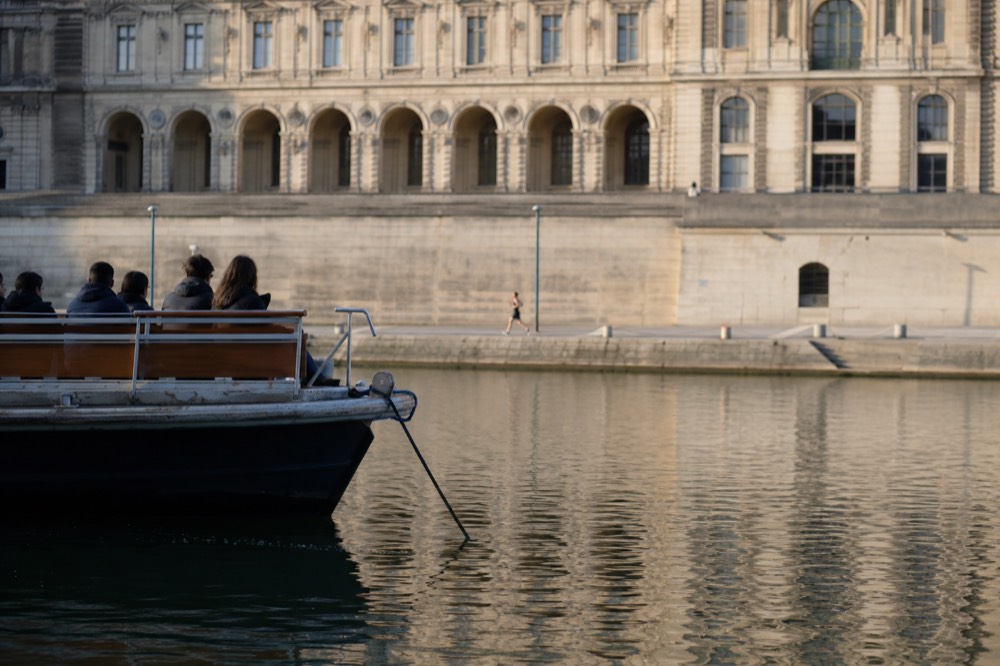
Morning sailings are the insider pick. The first departures, typically around 10am depending on season, carry fewer passengers, the decks are quieter, and the light on the stone facades of the Louvre and Notre-Dame is soft rather than harsh. Traveler reports from 2025 and 2026 consistently recommend first sailings for photography and for anyone who dislikes jostling for a railing spot.
Midday is the compromise slot. Views are clearest, every monument is fully visible, and availability is easiest, but the light is flat and the boats fill with families and tour groups. If your only free window is lunchtime, it still works, just do not expect the postcard glow.
Sunset and evening are what most people picture when they imagine Paris from the water. The monuments switch on, the bridges are lit, and the Eiffel Tower sparkles on the hour. The trade-off is simple: everyone else wants this too, so evening sailings are busier, booked further ahead, and the best deck positions are claimed early. Our guide to Seine cruises from the Eiffel Tower covers the boarding logistics at the busiest evening docks.
Is The Seine River Cruise Better At Night Or Day?
Night is better for atmosphere and the sparkle show, day is better for actually seeing the city: night sailings give you illuminated monuments, bridges and the Eiffel Tower's hourly 5-minute sparkle, while daytime gives you clear views, calmer decks and cheaper, more flexible walk-up tickets. Neither is objectively superior. The honest answer is that they are different products that happen to share a river.
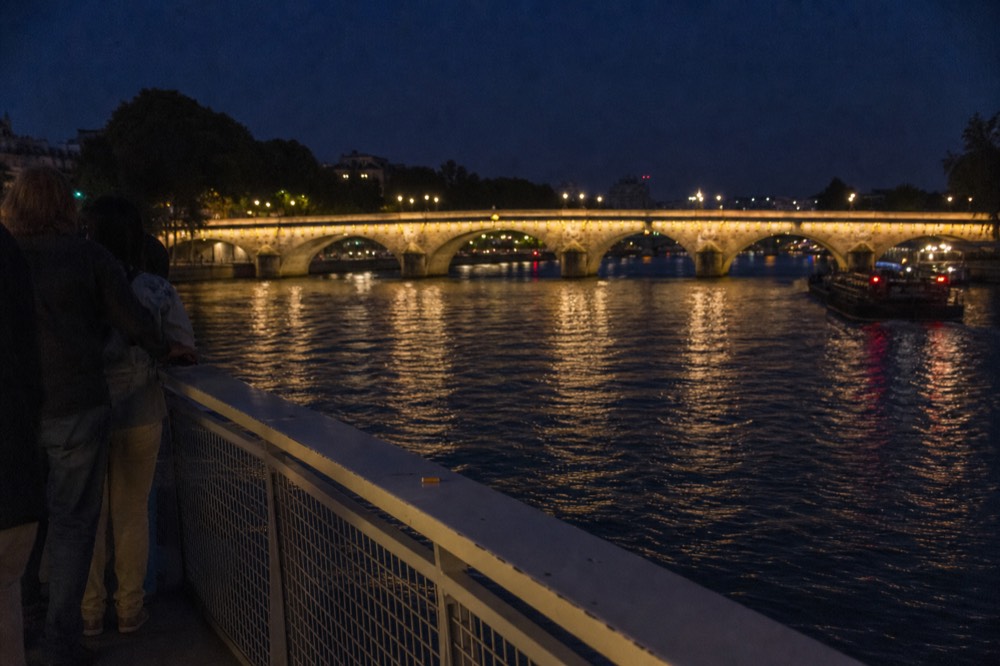
At night you get the version of Paris the city is famous for. The Louvre pyramid glows, Notre-Dame is floodlit, Pont Alexandre III blazes, and the river doubles every light it carries. The Eiffel Tower sparkles for exactly 5 minutes at the start of every full hour after dusk, until midnight in the low season or 1am in summer, and catching that from the water is the single most photographed moment of any Seine cruise. The cost is literal: evening products with champagne or music run higher than daytime sightseeing, and the decks are fuller.
By day you see Paris as a city rather than a light show. Architectural detail on the quais, the scale of the buildings, the activity on the river itself, all of that reads better in daylight. Daytime sightseeing cruises start from about $20 to $21 per person, run every 30 to 60 minutes in season, and are far more forgiving if your plans shift. For a fuller comparison of the two experiences, see our blog post is the Seine river cruise better at night or day.
If your trip allows only one cruise and you want the iconic memory, book the evening. If you want to understand the city and keep your schedule loose, book the day. If you have two evenings, do both and compare.
What Does A Seine River Sunset Cruise Actually Give You?
A sunset cruise gives you the transition: roughly 30 to 45 minutes of golden and blue-hour light on the monuments, followed by the city switching on around you, when the selected departure overlaps sunset on your travel date. It is the photographer's slot, and the hardest to get right without knowing sunset time for your date.
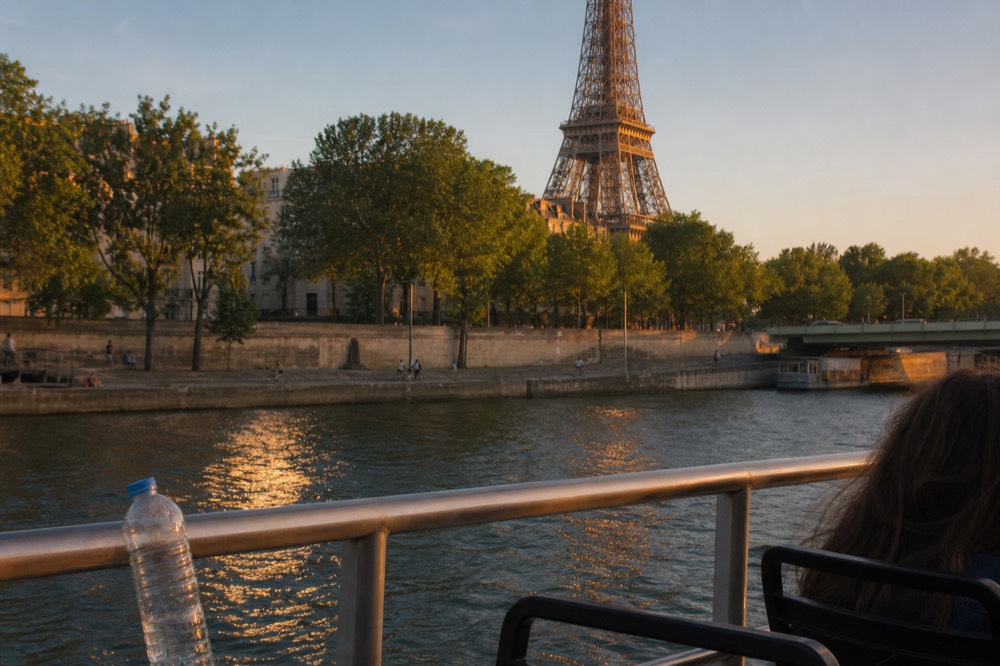
The mechanics matter. Sunset in Paris moves from roughly 5pm in December to nearly 10pm in late June. A "sunset cruise" in April and a "sunset cruise" in July are completely different animals: the April sailing finishes in full darkness, the July one is still in daylight for most of its run. Check the actual sunset time for your date before booking, then count backwards. You want to board 30 to 45 minutes before sunset to catch golden hour on the water and the illumination switch-on near the end.
The open-air products make the most of this window. The sunset aperitif cruise from France Tourisme departs from Square du Vert-Galant at Pont Neuf on an open-top terrace boat, about one hour, with one glass of wine, Champagne or a soft drink included, blankets in cooler weather, and a capacity around 130; the live listing has the current price. Its Pont Neuf departure is useful for a central-Paris itinerary; that location does not guarantee a quieter queue. For cheaper ways to catch the same golden hour, our roundup of an affordable evening boat tour covers the budget end of the evening lineup.
The Vedettes de Paris champagne and music cruise is the electric-boat take on the same window: a silent, 100% electric vessel departing near the Eiffel Tower, one glass of Duval-Leroy Champagne included, background music, and a route past the illuminated Eiffel Tower, Louvre, Notre-Dame and Pont Alexandre III. It is rated 4.1/5 from 50 reviews and runs from $38 per person. The review count is the smallest in our roster, but the listing is live and the silence of the electric drivetrain genuinely changes the evening mood on deck.
One planning note: sunset slots are the first evening departures to sell out in peak season, because they serve two audiences at once, photographers and diners heading to a later dinner. If a sunset sailing is your priority, book it further ahead than you think you need to.
Is There A Night Cruise Around The Eiffel Tower?
Yes: several cruises pass the illuminated Eiffel Tower at night, including the Vedettes de Paris Champagne-and-music cruise, the Pont Neuf evening cruise and evening departures of the standard Bateaux Parisiens sightseeing loop, though none circles the tower itself, every product runs the river past it. The tower sits on the bank of the Seine, so "around the Eiffel Tower" in practice means the boat passes close by on the stretch between Pont d'Iéna and Pont de Bir-Hakeim.
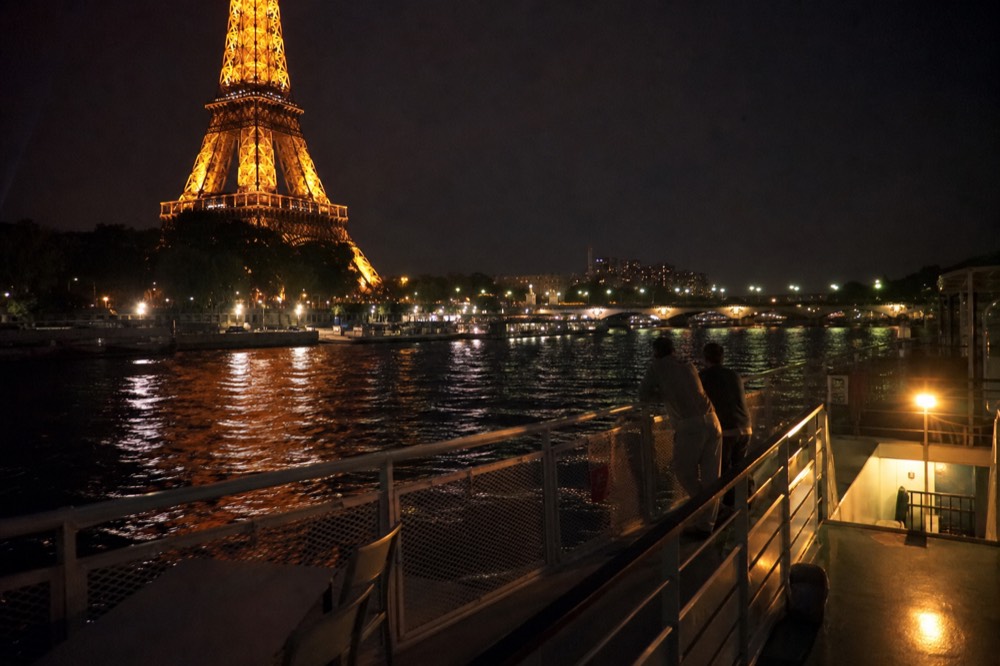
For a short evening starting near the Eiffel Tower, Vedettes de Paris offers a one-hour electric Champagne-and-music cruise from Port de Suffren for adults aged 18 and over. It is distinct from Bateaux Parisiens sightseeing at Port de la Bourdonnais, which does not include Champagne. From central Paris, the Pont Neuf evening cruise offers another departure point with one drink included.
A practical detail worth knowing: the Metro Line 6 works may close Bir-Hakeim station, the stop closest to the Eiffel Tower docks, on select Sundays between September and November 2026. If you are boarding at Port de la Bourdonnais or Port de Suffren on a Sunday in that window, check your transit route and leave extra time.
What Departure Times Do Seine Cruise Operators Actually Run?
Operators publish a clear evening pattern of roughly 6:15pm, 8:15 to 8:30pm and 9:15pm departures for dinner and evening cruises, while daytime sightseeing runs on a rolling schedule of every 30 to 60 minutes from around 10am, with operators recommending arrival 15 to 30 minutes early. The evening slots are not arbitrary: they are built around dusk and the tower's sparkle schedule.
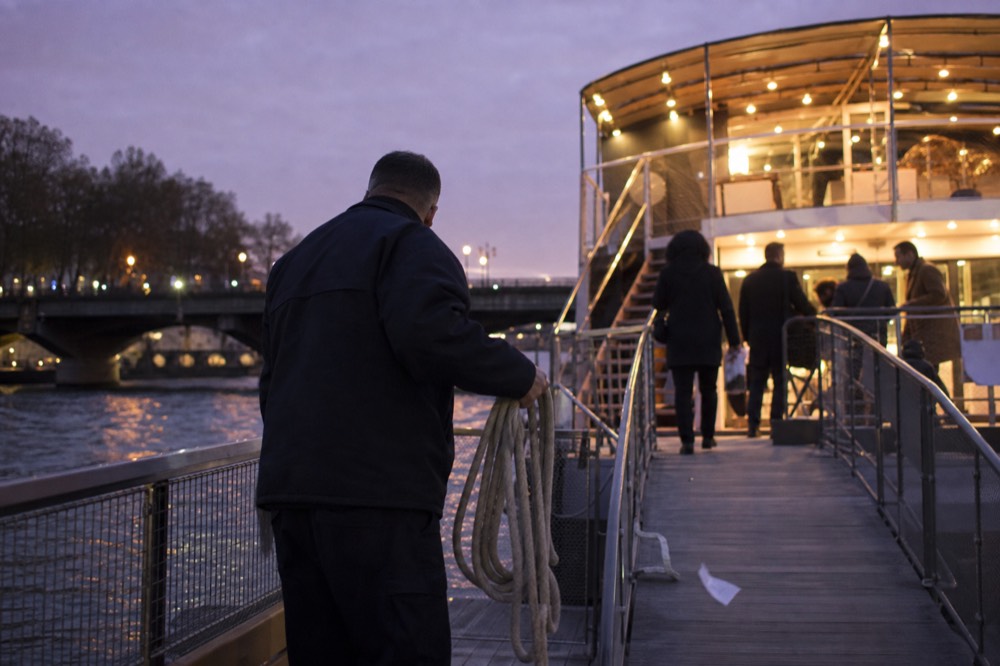
An early evening sailing may overlap sunset in some months; 6:15pm is not a year-round golden-hour departure. The 8:15 to 8:30pm slot is the dinner-cruise workhorse, timed so a roughly two-hour meal lands you back at the dock mid-evening with the city fully lit. The 9:15pm departure is the night-photography slot, deliberately late enough that later sailings usually catch an on-the-hour sparkle. Because the first sparkle falls on the first full hour after sunset, roughly 6pm in deep winter, 7 to 9pm in spring and autumn, and around 10pm in summer, the 9:15pm sailing is the safest sparkle bet in every season except high summer, when even it can be tight.
| Departure slot | What it is built for | Typical product | Best for |
|---|---|---|---|
| Around 10am | First sightseeing loop | 1-hour cruises from Eiffel Tower or Pont de l'Alma | Calm decks, natural light |
| Midday | Rolling sightseeing | Sightseeing and lunch cruises | Availability, clear views |
| Roughly 6:15pm | Sunset straddle | Sunset aperitif cruises | Golden-hour photos |
| 8:15 to 8:30pm | Dinner window | 3- and 4-course dinner cruises | Full evening out |
| Roughly 9:15pm | Night loop | Evening champagne cruises | Illuminations, sparkle |
Daytime is a different rhythm entirely. Sightseeing cruises are walk-up friendly, with departures every 30 to 60 minutes in season and tickets often valid on any sailing that day. Dinner and evening cruises are not: listing data shows they are booked roughly 45 to 47 days ahead on average, and the Bateaux Mouches dinner cruise in particular is a genuine sell-out risk in peak season. Book evening products weeks ahead, not days.
When Does The Eiffel Tower Sparkle, And Why Does It Drive Evening Demand?
The Eiffel Tower sparkles for exactly 5 minutes at the start of every full hour after dusk, every night, ending at midnight in the low season and 1am in summer, and because evening cruise departures are timed around dusk, later sailings usually catch the show while early ones can miss it entirely. That single schedule explains most evening booking behavior on the Seine.
The golden lighting switches on at dusk via sensors, and the sparkle effect, some 20,000 bulbs flashing on the tower, runs for the first 5 minutes of each hour until the lights go out. The first sparkle time shifts with the seasons: roughly 6pm in December to February, 7 to 9pm in spring and autumn, and around 10pm in June to August.
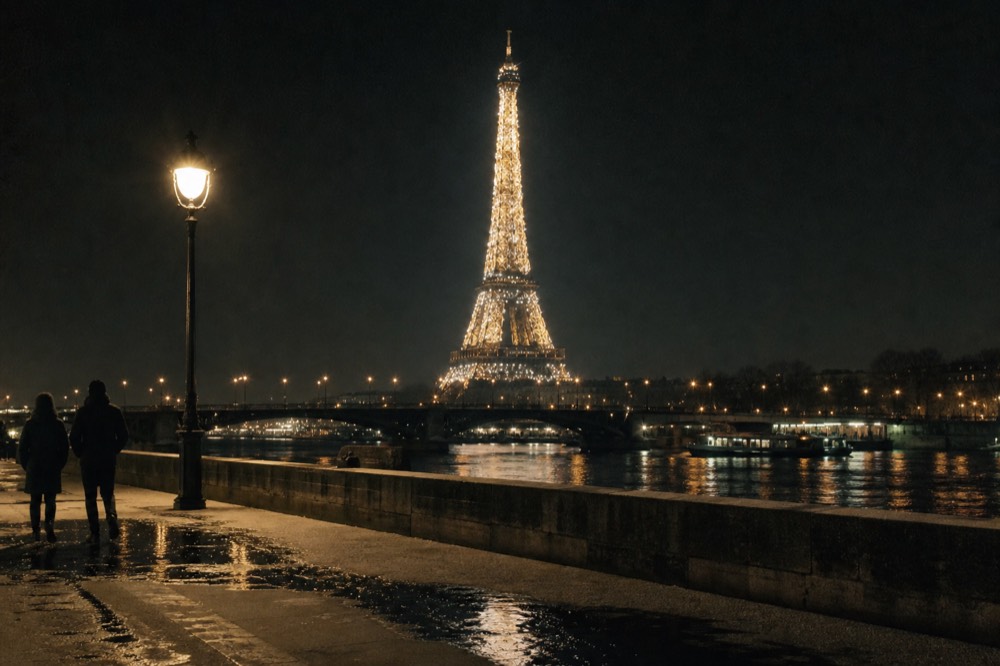
Here is the planning insight most first-time visitors miss: in summer, a 9:15pm departure boards in daylight and may only reach the tower around the 10pm sparkle, while in October the same sailing is a full night cruise with two sparkle chances. Winter is the hidden best value for sparkle chasers, darkness falls at 6pm, crowds are thinner, and even an early evening sailing may see the illuminated city, subject to the day’s schedule. The catch is schedule: off-season sailing frequency drops, so check the day's timetable before committing to a plan.
| Season | Approximate first sparkle | Last sparkle | Which sailing catches it best |
|---|---|---|---|
| December to February | Around 6pm | Midnight | Any evening sailing |
| March to May | 7 to 9pm | Midnight to 1am | 8:15pm and 9:15pm slots |
| June to August | Around 10pm | 1am | 9:15pm slot, sometimes only the tail |
| September to November | 7 to 8pm | Midnight | 6:15pm onward, all reliable |
One honest caveat from recent guest reviews: even with a pre-purchased ticket, queue waits of 15 to 60 minutes or more are documented in peak periods, and one October 2025 review flagged a premium seat upgrade not delivering the promised view due to an obstructed window. Arriving 30 to 45 minutes early for an evening sailing, which is what experienced travelers do for upper-deck railing seats, absorbs most of that risk.
How Do Crowds Change Across The Day On The Seine?
Crowds build steadily from the first morning sailing to the early-evening peak, then thin after the last dinner-cruise boarding, so the calmest water is around 10am and the busiest decks are the sunset and 8:15pm slots in July and August. The pattern is predictable enough to plan around rather than gamble on.
Summer 2026 drew 13.3 million tourists to Paris and Île-de-France between June and August, up 3% on the prior year, and the pressure shows up directly on the boats. Evening and dinner sailings carry the strongest demand, and the operators with the largest boats absorb the most passengers, which travelers on forums consistently describe as the classic-feeling but most crowded option, while smaller-boat and electric operators draw praise for quieter decks.
The counter-strategies are unglamorous but effective. Take a weekday over a weekend for any evening sailing. Take the first morning departure if your priority is deck space and photography. Compare the onboard format as well as the time: electric propulsion does not itself guarantee fewer passengers. And arrive early: 30 to 45 minutes for evening upper-deck seats, 15 to 30 minutes for a standard daytime sailing.
| Time block | Crowd level | Photo conditions | Featured tours running then |
|---|---|---|---|
| First morning, around 10am | Lowest | Soft, clear light | Eiffel Tower 1-hour cruise, Bateaux Mouches sightseeing |
| Midday | Moderate | Bright, flat light | All sightseeing products, lunch cruise |
| Late afternoon | Building | Warming light | Sightseeing, hop-on hop-off pass |
| Sunset, around 6:15pm | High | Golden to blue hour | Sunset aperitif cruise, Vedettes de Paris evening cruise |
| Night, date-dependent | Often busy | Illuminations; sparkle if timing and sightline align | Champagne-and-music cruise, dinner cruises |
Can Weather Or River Levels Change Your Sailing Time?
Yes: high water on the Seine triggers official restrictions, navigation halts outright at 4.30m on the Austerlitz gauge, and operators respond to intermediate levels by closing upper decks and shortening routes rather than cancelling, so winter and spring sailings carry a small but real disruption risk. It is rare, but it is documented and worth knowing before you anchor an evening around a cruise.
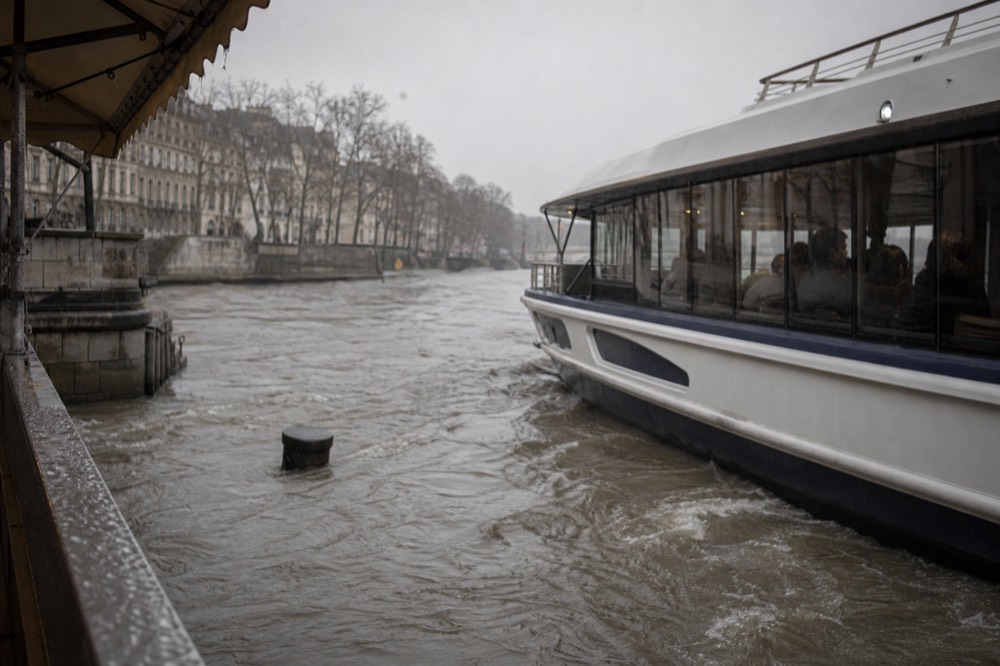
The City of Paris states navigation stops at 4.30m at Austerlitz, with riverside paths closing progressively between 3.20m and 6.10m. This is not theoretical: navigation was fully suspended in April 2024 when the river exceeded that threshold, and during the October 2024 storm Kirk event, with water between 2.72m and 3.45m, operators closed upper decks to avoid bridge-strike risk and shortened routes rather than scrapping sailings. In the 2018 floods, several operators suspended service for weeks. Operators monitor the official flood service at Vigicrues hour by hour, and you can too.
The current picture is calm: early September 2026 water levels at Paris-Austerlitz sit in the normal range, around 0.95m, and no flood-driven passenger-cruise suspensions were recorded in 2025 or 2026 beyond the already-documented 2024 events. Rain is the more everyday factor: boats are covered and run rain or shine, so a grey evening costs you the sparkle photos but not the sailing. The river's water quality has its own separate story, and our piece on the story behind why the Seine got dirty covers how the cleanup changed things.
Which Cruise Should You Book For Each Time Of Day?
Match the product to the experience: Bateaux Parisiens sightseeing for a daylight loop, the Pont Neuf drink-included cruise for an evening outing, and Vedettes de Paris Champagne and music for an adult evening starting near the Eiffel Tower. Check the actual timetable against sunset before choosing.
For morning and daytime, the default pick is the Bateaux Parisiens 1-hour cruise departing from Port de la Bourdonnais at the foot of the Eiffel Tower, rated 4.4/5 with close to 90,000 reviews, from $21 per person. It is a modern boat with a top deck and indoor seating, audio commentary via app in up to 14 languages, and a round trip past Notre-Dame, the Louvre and the Musée d'Orsay. The Bateaux Mouches sightseeing cruise is the same idea from Port de la Conférence near Pont de l'Alma, 4.4/5 from 5,898 reviews, from $20, on the oldest and most historic Paris river-cruise brand, operating since 1949.
For flexibility across the whole day, the Batobus hop-on hop-off pass runs 9 stops with boats roughly every 15 to 40 minutes, a full loop taking about 1h45 to 2 hours, at EUR 23 for a 24-hour adult pass. Be clear about what it is: river transport with no narration, not a guided tour. Our comparison of hop-on hop-off versus a sightseeing cruise breaks down when each one wins.
For evening, compare the one-hour Pont Neuf cruise with a drink included against the Vedettes de Paris electric Champagne-and-music hour. The latter starts near the Eiffel Tower and is restricted to adults aged 18 and over. If your evening is really about dinner, our Seine dinner cruise guide covers the meal-boat choices.
Whatever slot you choose, book it through the operator's live listing rather than a street vendor, arrive early for evening sailings, and plan your departure around the sparkle clock rather than the dinner clock. The river is there all day; the sparkle is not.
The short answers: evening wins for atmosphere and the Eiffel Tower sparkle, morning wins for calm decks and light, sunset is the photographer's slot, and weather cancellations are rare but real when the Seine runs high. The questions below cover the specifics travelers ask most, from sparkle timing to how early to arrive at the dock.
Common Questions About The Best Time For A Seine River Cruise
Is the Seine river cruise better at night or day?
Night is better for atmosphere, illuminated monuments and the Eiffel Tower sparkle, which runs 5 minutes at the start of every full hour after dusk. Day is better for clear views, calmer decks and cheaper, more flexible tickets, with sightseeing from about $20 to $21 per person. If you want the iconic memory, book evening; if you want flexibility, book day.
Is there a night cruise around the Eiffel Tower?
Yes. Vedettes de Paris Champagne and music and the Pont Neuf evening cruise pass the tower, while Bateaux Parisiens offers evening sightseeing departures. No boat circles the tower itself, and sparkle views depend on the time and position of the boat.
What time does the Eiffel Tower sparkle?
The tower sparkles for exactly 5 minutes at the start of every full hour after dusk, ending at midnight in the low season and 1am in summer. The first sparkle falls roughly 6pm in winter, 7 to 9pm in spring and autumn, and around 10pm in June to August. Later cruise departures, like the 9:15pm slot, are the most reliable way to catch it from the water.
What is the best month for a Seine cruise?
May, June and September balance long daylight, reliable weather and thinner crowds than July and August. Winter evenings are the hidden value for sparkle chasers, since darkness falls by 6pm and even early sailings get a fully lit city, though sailing frequency drops in the off-season.
How early should I arrive for a Seine cruise?
Operators recommend 15 to 30 minutes early for standard sightseeing sailings, and experienced travelers arrive 30 to 45 minutes early for evening sailings to claim upper-deck railing seats. Real 2025 and 2026 reviews document queue waits of 15 to 60 minutes even with pre-purchased tickets in peak periods.
Can weather cancel a Seine cruise?
Rarely. Boats are covered and sail rain or shine. The real risk is high water: navigation on the Seine halts outright at 4.30m on the Austerlitz gauge, and at intermediate levels operators close upper decks and shorten routes rather than cancel. Levels sat around 0.95m, the normal range, in early September 2026.
Your Next Step On The Seine
Paris Seine River Sunset & Evening Champagne Cruises
Chosen the evening window? Check your Pont Neuf cruise date before arranging dinner around sunset.
one-hour Pont Neuf evening/sunset cruise with one glass of wine, Champagne or soft drink and background music. 60 minutes; arrive 15 minutes early. Allow 75 minutes including boarding. Travel to the pier is extra.
Adjust Your Choice And Compare Costs
Start with this general recommendation, or choose what matters to you. Durations are listed with each option. Allow additional time to reach the meeting point and check in.
- Paris Seine River Sunset & Evening Champagne Cruises
- one-hour Pont Neuf evening/sunset cruise with one glass of wine, Champagne or soft drink and background music. 60 minutes; arrive 15 minutes early.
- Paris: 1-Hour Seine Cruise departing from the Eiffel Tower
- Port de la Bourdonnais, pontoon 3, Bateaux Parisiens logo, Eiffel Tower. One-hour round-trip sightseeing cruise; Multilingual audio / smartphone commentary. Wheelchair accessible; Under-4s free; No oversized luggage or large bags; Assistance dogs allowed; other pets prohibited.
- Paris Seine River Gourmet Lunch Cruise with Champagne Option
- three-course seated lunch, tea/coffee, optional Champagne and romantic window-table package. 90-minute cruise; arrive 30 minutes early.
Choose a date to see published departures. Seats and final prices are confirmed on Viator.
No listed experience fits those choices. Adjust the experience or time, or reset to the general recommendation.