Seine River Cruise Tickets: How To Book Without Overpaying Or Waiting In Line
Seine river cruise tickets are cheap, fast to buy, and mostly walk-up friendly, but the dinner and evening boats are a different story: they sell out weeks ahead and reseller markups are real. Here is what the booking data actually shows.
Short answer
Sightseeing cruise tickets run from $20-$27 per person and can often be bought same day at the dock. Dinner and evening cruises average roughly 45-47 days of advance booking, and peak-period queues of 15-60+ minutes are documented even with pre-purchased tickets, so buy early and arrive ahead of your slot.
Seine river cruise tickets sit in an odd spot in the Paris planning stack. The basic sightseeing loop is one of the cheapest paid activities in the city, from $20 per person with the oldest operator on the river, and departures run every 30-60 minutes for most of the day. Yet the same river's dinner boats routinely sell out more than a month ahead, and real reviews from 2025 and 2026 describe people with pre-purchased tickets still waiting an hour at the dock in peak season.
The gap between those two experiences is what this guide untangles. The booking data, the queue reports, the reseller pattern, and the handful of genuine red flags are all documented below, so you can decide in about ten minutes of reading what to book tonight and what to leave until you are standing on the quay. If you want the deeper pricing breakdown by cruise type, the companion piece on Seine cruise prices in Paris covers the full ladder from sightseeing to private charter.
How Far Ahead Should You Book Seine River Cruise Tickets?
The practical distinction is between a sightseeing ticket and a seated meal. A dinner cruise has a particular service, table allocation and boarding time. Sightseeing products can offer several departures, but the ticket may still require a date or time. Check the actual options for your party rather than relying on a general booking window.
Why does the dinner window run so long? Because the seated boats are the ones couples book for anniversaries and proposals, and those buyers plan weeks out, which pushes everyone else to plan weeks out too. The sightseeing boats, by contrast, absorb walk-up demand all day long. Operators themselves recommend arriving 15-30 minutes early for a standard cruise, which tells you the queue, not the sell-out, is the real constraint at that level.
There is a third category that behaves differently again: the hop-on-hop-off pass. Its validity starts on first boarding, so choose it for multiple riverside stops rather than treating it as a reserved sightseeing departure.
If you are weighing whether a specific date needs pre-booking at all, the blog post on whether to book a Seine cruise ahead of time works through the decision by season and product type.
How Much Do Seine River Cruise Tickets Cost In 2026?
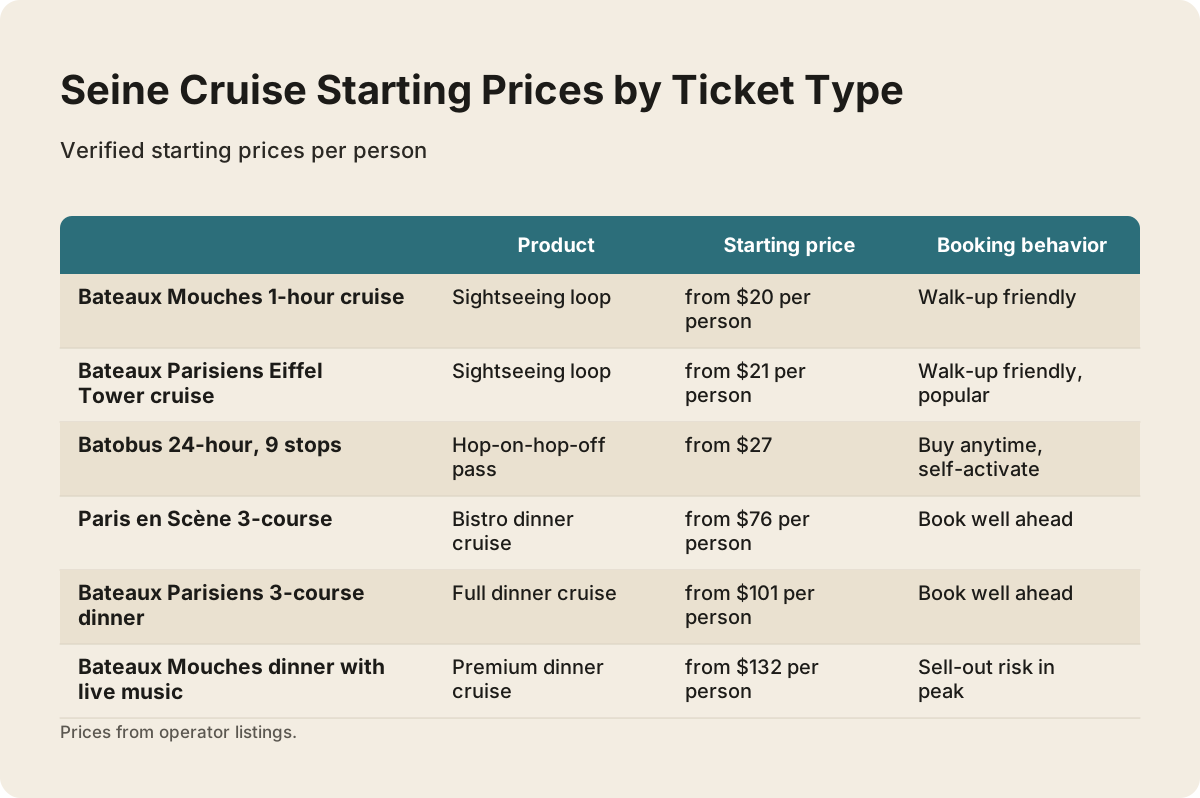
Across the sightseeing operators, 2026 online prices run about EUR 15-21 per adult, with the Pont Neuf operator lowest and the hop-on-hop-off day pass highest at EUR 23; in the verified tour set here, sightseeing tickets run from $20-$27 per person and dinner cruises from $76-$133. The euro figures come from the operators' own 2026 listings; the dollar figures are the confirmed starting prices for the specific products this site tracks. Either way, the entry ticket is roughly the price of a museum admission, not a splurge.
| Ticket type | Product | Starting price | Booking behavior |
|---|---|---|---|
| Sightseeing loop | Bateaux Mouches 1-hour cruise | from $20 per person | Walk-up friendly |
| Sightseeing loop | Bateaux Parisiens Eiffel Tower cruise | from $21 per person | Walk-up friendly, most-booked |
| Hop-on-hop-off pass | Batobus 24-hour, 9 stops | from $27 | Buy anytime, activate on first use |
| Bistro dinner cruise | Paris en Scène 3-course | from $76 per person | Book well ahead |
| Full dinner cruise | Paris Seine 3-course dinner | from $101 per person | Book well ahead |
| Premium dinner cruise | Bateaux Mouches dinner with live music | from $133 per person | Strong sell-out risk in peak season |
A few products in the wider set carry "price on the listing" flags because sources disagreed between verification passes: the lunch cruise, the Italian dinner cruise, the gourmet dinner with singer and DJ, and several evening aperitif boats. For those, the live listing has the current figure, and it is more honest to say so than to print a number that may be stale by the time you read this.
Two pricing facts worth knowing before you buy anything. First, the Paris Museum Pass does not include any Seine cruise from any listed operator, so if a bundle seems to suggest otherwise, read the fine print. Second, the Batobus hop-on-hop-off pass offers a Navigo-holder discount at the ticket booth, about EUR 18 instead of EUR 23 for 24 hours, which is one of the few genuine discounts on the river.
Compare a flexible multi-stop pass, a single sightseeing loop and a dinner reservation by what you actually plan to use. A higher total may buy a meal or longer pass validity; it does not automatically buy faster boarding.
Dinner and evening departures should be checked for your actual date and party size. Compare the service, boarding time and cancellation terms before arranging the rest of your day; a general booking lead time does not establish availability.
Where Should You Buy Your Ticket: The Dock, The Operator's Listing, Or A Reseller?
Sightseeing tickets can be bought at the dock or online; dinner bookings are best arranged once your date is fixed. Whether you use an operator’s website or a booking platform, compare the exact inclusions, total price, boarding instructions and cancellation terms. A bundled ticket is only good value if you want every included activity and understand how each component is redeemed.
What does the reseller markup look like in practice? Reviews from 2025 and 2026 describe Eiffel Tower tickets resold at roughly 300 percent markups via third parties, with some buyers reporting their purchased Seine-related tickets were never delivered or never honored. The generic lesson: if a site that is not the operator or a major booking platform is selling you a "skip-the-line" or "VIP" cruise bundle, the price and the promise are both suspect. One October 2025 review even flagged a paid seat upgrade that did not deliver the promised view because of an obstructed window, which is a reminder that premium labels deserve scrutiny even on legitimate boats.
Use a clearly identified operator or established booking platform, and check the named boat, departure point, ticket option and cancellation terms before paying. Viator and GetYourGuide are booking platforms; their listings are not the operator’s own sales channel.
One more structural point in favor of booking ahead online rather than at the booth: e-tickets skip the ticket-office line, which in peak periods is itself a 15-30 minute queue before you even join the boarding line. You still need to arrive early, but you arrive once, not twice.
How Long Are The Real Waits At The Dock?
Documented 2025-2026 queue reports run from 15 minutes to over an hour even with pre-purchased tickets, concentrated on peak-period and evening sailings, so the practical rule is to arrive 30-45 minutes early for any departure you actually care about, and earlier still for an upper-deck railing seat. These are not operator marketing numbers; they come from dated traveler reviews describing waits at the biggest operators' docks in summer. The pattern is worst after 9pm on the large evening departures, where crowding at boarding has been a recurring complaint.
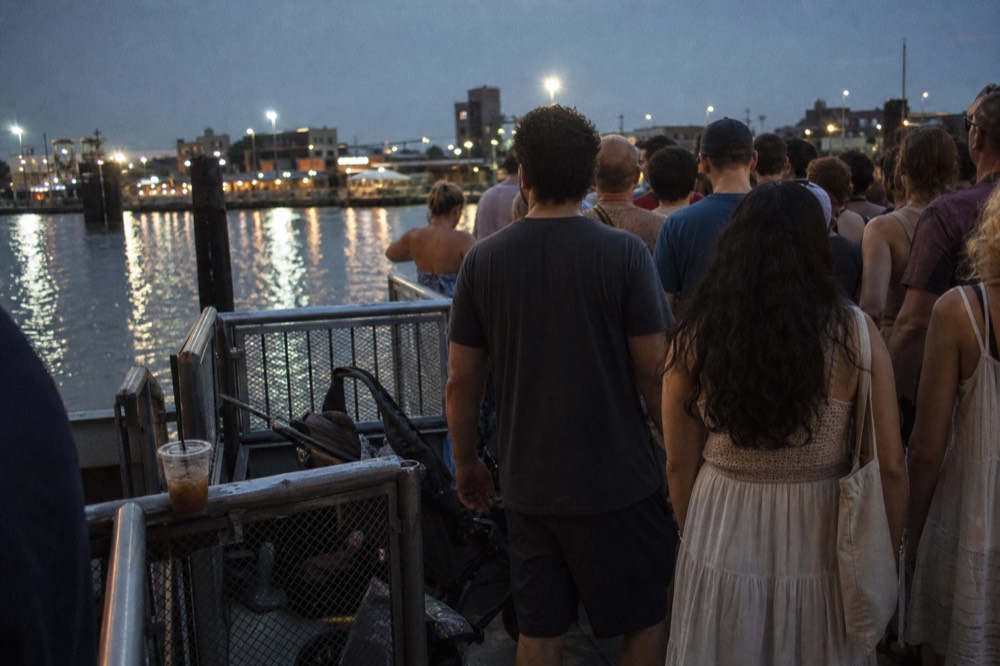
The waits are not random. They cluster where three things coincide: a famous departure point (the Eiffel Tower docks are the busiest on the river), a peak time (sunset and evening sailings), and a boat with a sought-after upper deck. Bag and security checks at the Eiffel Tower embarkation points add a fixed overhead to every boarding, which is why the 30-45 minute guidance exists even for morning sailings that are otherwise calm.
| Situation | Typical reported wait | What to do |
|---|---|---|
| Morning sightseeing, weekday | Short, often minimal | Arrive 15 minutes early |
| Midday sightseeing, peak season | 15-30 minutes | Arrive 30 minutes early, e-ticket in hand |
| Evening sailing, peak season | 30-60+ minutes | Arrive 45 minutes early or pick a morning slot |
| Dinner cruise boarding | Structured, timed | Arrive by the stated boarding window |
| Hop-on-hop-off first use | One boat cycle, 15-40 minutes | Check the next-boat time at the stop |
If the queue risk is the part that worries you most, the honest workaround is the hop-on-hop-off pass: because boats come every 15-40 minutes and any boat accepts your pass, missing one costs you a coffee on the quay, not your cruise. The full loop takes about 1h45-2 hours, and the 24-hour pass runs EUR 23 adult, EUR 13 child.
Which Seine Cruises Should You Stay Away From?
The honest red flags are structural, not brand-based: single-digit review counts, unclear per-person versus per-boat pricing, tickets sold by a site with no operator relationship, and "VIP view" promises that cost extra without guaranteeing anything, and any listing showing two or more of these at once deserves a pass. None of the fifteen cruises in this lineup trips those flags. The problems live in the long tail of listings that copy the legitimate products' names.
Walk through the flags one by one. A single-digit review count on a "Seine dinner cruise" means either a brand-new listing or a relisted old one, and you have no way to know which. Unclear pricing structure matters most on private charters, where one genuine product in this set prices per boat for up to about eight people, not per person; a listing that does not say which it is doing is a listing that can surprise you at checkout. The reseller problem was covered earlier: no operator relationship, no recourse. And the paid-view-upgrade problem is documented in a real October 2025 review of a premium seat that faced an obstructed window.
| Red flag | Why it matters | Safer alternative |
|---|---|---|
| Single-digit review count | No track record, possibly relisted | Pick listings with hundreds-plus reviews |
| Per-person vs per-boat ambiguity | Private charters price per group | Confirm the pricing basis before paying |
| Third-party "bundle" pricing | Documented markups and non-honored tickets | The operator's live listing |
| Paid "VIP view" upgrades | Views not guaranteed on boats | Standard seat, arrive early for the rail |
| No stated cancellation terms | No refund path if plans change | Listings that state their terms plainly |
For a fuller treatment of the same question, including which product types attract the worst listings, see which Seine cruises to stay away from. The short version there and here is identical: the legitimate market is small, well-reviewed, and easy to verify, so anything that feels hard to verify probably is.
Do Seine Cruise Tickets Sell Out?
Any particular departure can fill, including sightseeing boats. Dinner reservations tie your booking to a finite number of tables and services, while a flexible sightseeing or transport ticket may let you take a later departure under its terms. Check your date rather than relying on a general claim that a category cannot sell out.
Dinner and evening departures should be checked for your actual date and party size. Compare the service, boarding time and cancellation terms before arranging the rest of your day; a general booking lead time does not establish availability.
A sightseeing e-ticket can save a separate purchase at the ticket office, but it does not by itself guarantee priority at security or boarding. Follow the ticket’s departure and arrival instructions.
Can Weather Or River Levels Cancel Your Seine Cruise?
Yes, and the mechanism is real and official: navigation on the Seine through Paris is halted outright once the river reaches 4.30 m at the Austerlitz gauge, with partial restrictions beginning far earlier, and operators respond by shortening routes, closing upper decks, or switching boats rather than always cancelling outright. This is not an edge case invented by terms and conditions. Full suspension happened in April 2024 when the river exceeded the threshold, and the October 2024 storm Kirk event brought partial restrictions in central channel sections, with named operators describing route shortening and deck closures on the record.
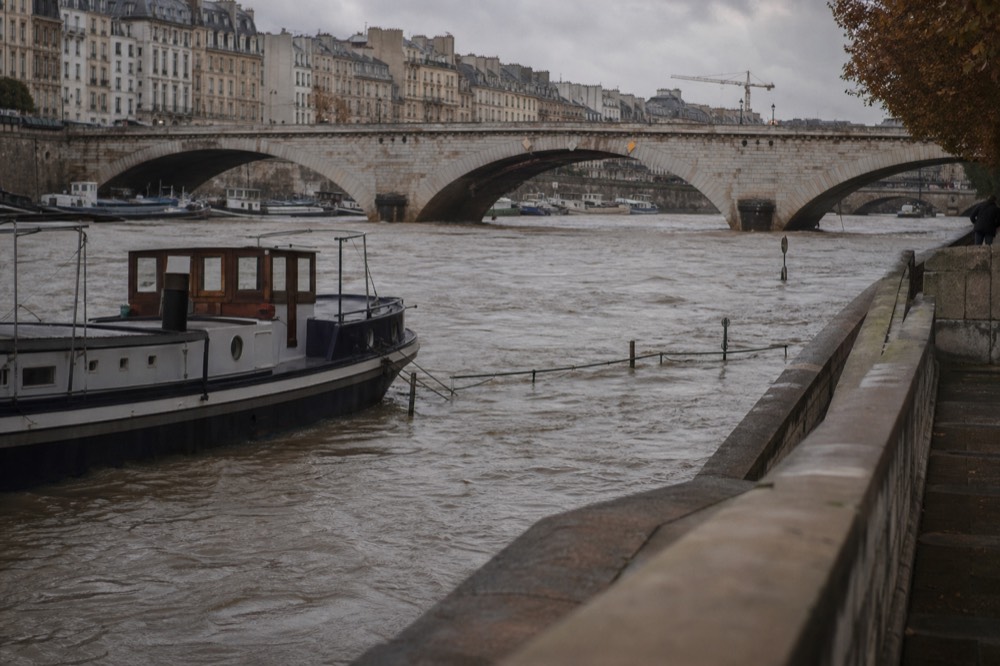
What does this mean for a ticket buyer? Three things. First, high-water disruption is seasonal and rare outside winter and early spring; in early September 2026 the Austerlitz gauge sat around 0.95 m, comfortably in the normal range. Second, the operators' documented coping pattern means a high-water cruise is more likely to be a shortened or altered route than a cancellation, so a refund is not automatic. Third, the water levels are public: the official flood monitoring service at vigicrues.gouv.fr shows the Austerlitz reading in real time, and it is the tool the operators themselves monitor hour by hour. The city's own flood-stage information is published on paris.fr.
The booking takeaway: check the cancellation terms on your listing before you pay, especially for a winter or early-spring trip, because the policy is what determines whether a rerouted or cancelled sailing costs you anything.
What Does Each Extra Dollar Actually Buy You?
Moving up the Seine cruise price ladder buys you, in order: flexibility (the multi-stop pass), then seating and a meal (bistro and full dinner cruises), then atmosphere (live music, Champagne, premium boats), and the jumps are large, from about $20 for a loop to $133 for the flagship dinner experience. None of the rungs buys you a better view of the monuments. Every boat on the river, from the cheapest shuttle to the most expensive dinner boat, passes the same Eiffel Tower, the same Notre-Dame, and the same Louvre, because the sightseeing route is the river itself.
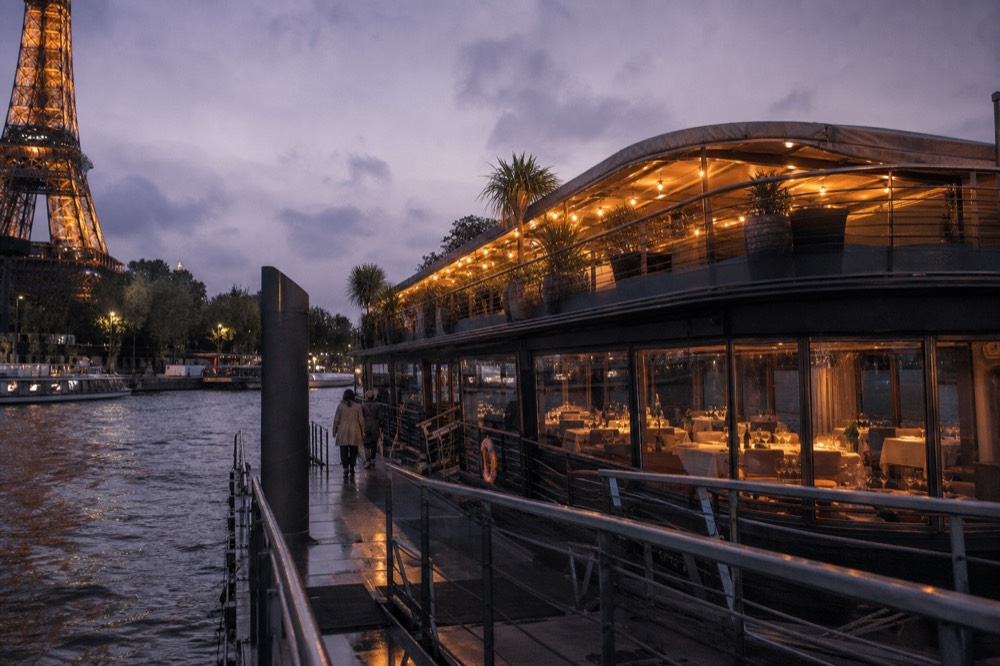
That is worth internalizing before you spend. If your goal is photos and an overview, the $20-27 sightseeing tier is the correct purchase, and paying more buys nothing you will notice. If your goal is an evening out, the dinner tier is not really a cruise purchase at all, it is a restaurant purchase with a moving dining room, and it should be evaluated like one: menu, service level, music, duration. The honest recurring criticism in dinner-cruise reviews is that food quality does not always match the view, so read the recent reviews of the specific boat, not the category.
Dinner options differ in menus, service, departure point and duration. Compare the complete ticket for your chosen date, including any drinks or window-seat upgrade, rather than treating a higher starting price as proof of a better view.
For a romantic-evening framing of the same ladder, including the Champagne cruise tier between dinner and sightseeing, see the guide to champagne and romantic Seine river cruises. And if you are still deciding whether the whole category earns its ticket price at all, the site's own verdict piece, Cruise in Seine River, walks the worth-it question end to end.
These are the questions buyers actually ask before paying for Seine river cruise tickets, answered with the same booking data, queue reports, and official river-level thresholds covered above, so you can confirm your plan in one place. Each answer below is short and self-contained, and every figure carries the same September 2026 verification as the body of the guide.
Common Questions About Seine River Cruise Tickets
How far in advance should I buy Seine river cruise tickets?
Check the actual date and party size once your plans are firm. Dinner services have fixed tables and departure times; sightseeing options may offer more departures. Read the selected ticket’s cancellation and boarding terms before booking.
Do Seine cruise tickets sell out?
Sightseeing tickets effectively do not, because operators load the next departure continuously. Dinner cruises do sell out: they have fixed seatings, limited window tables, and the flagship Bateaux Mouches dinner cruise is a strong sell-out risk in peak season.
Is it cheaper to buy Seine cruise tickets at the dock?
Not usually. Operators price online tickets at or below dock rates, and the e-ticket also skips the ticket-office queue. The one genuine dock-side discount is the Batobus Navigo-holder rate, about EUR 18 versus EUR 23 for 24 hours.
Which Seine cruises should you stay away from?
Avoid listings with single-digit review counts, unclear per-person versus per-boat pricing, no stated cancellation terms, or tickets sold by a site with no operator relationship. The documented 2025-2026 markup and non-honor complaints all involve third-party resellers, not the operators' own listings.
How early should I arrive for my Seine cruise?
Plan on 15-30 minutes for a standard sightseeing sailing and 30-45 minutes for peak-period or evening departures. Real 2025-2026 reviews document waits of 15 to 60-plus minutes even with pre-purchased tickets, and upper-deck railing seats go first.
Can a Seine cruise be cancelled because of the river level?
Yes. Navigation through Paris halts outright at 4.30 m on the Austerlitz gauge, and partial restrictions begin earlier. More often, operators shorten routes or close upper decks instead of cancelling, so check your listing's cancellation terms and the live gauge at vigicrues.gouv.fr before a winter or spring sailing.
Your Next Step On The Seine
Seine River Guided Cruise by Vedettes de Paris
Have your day in mind? Check the guided sailing’s date, ticket option and boarding instructions before scheduling the next stop.
one-hour electric sightseeing cruise with live English/French guide from Eiffel Tower. Champagne/snack upgrades optional. 60 minutes cruising; arrive 20 minutes early. Allow 80 minutes including boarding. Travel to the pier is extra.
Adjust Your Choice And Compare Costs
Start with this general recommendation, or choose what matters to you. Durations are listed with each option. Allow additional time to reach the meeting point and check in.
- Seine River Guided Cruise by Vedettes de Paris
- one-hour electric sightseeing cruise with live English/French guide from Eiffel Tower. Champagne/snack upgrades optional. 60 minutes cruising; arrive 20 minutes early.
- Paris : 3-Course Gourmet Dinner Cruise on Seine River
- Paris Seine by Musée d’Orsay; exact option-specific map provided when booking. Cruise aboard glass-enclosed boat; Three-course dinner; Coffee or tea; Champagne only when corresponding option selected. Not suitable under 3 years; Not suitable wheelchair users; No pets, smoking, large bags; Vegetarian options documented.
- Paris: Hop-On Hop-Off Seine Cruise Pass with 9 Stops
- 24- or 48-hour pass from first boarding. Hop on/off at nine stops, with heated cabin and terrace. Journey and waiting time depend on stops. Not suitable for wheelchair users; folding strollers only. No guided commentary.
Choose a date to see published departures. Seats and final prices are confirmed on Viator.
No listed experience fits those choices. Adjust the experience or time, or reset to the general recommendation.